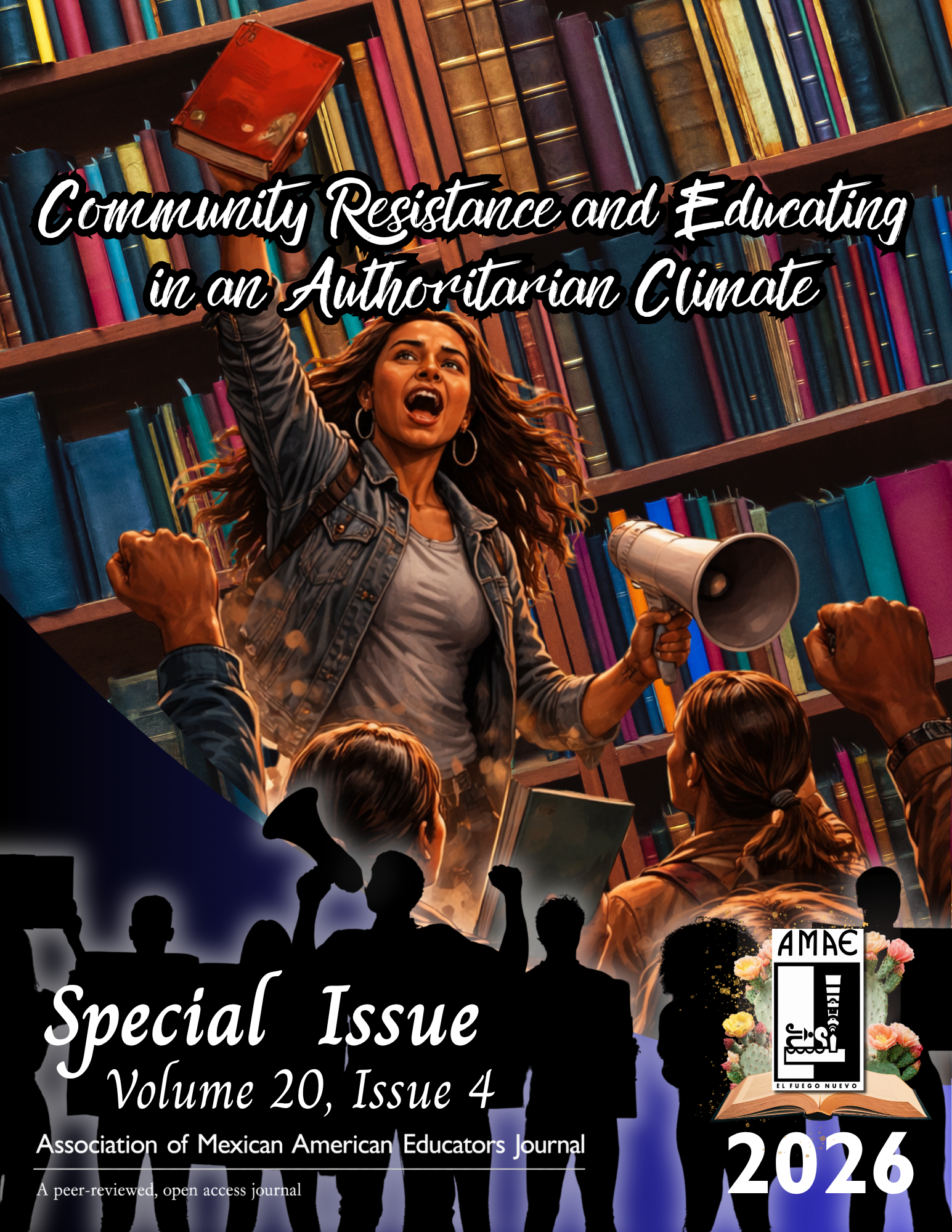
Vol. 20 Núm. 4 (2026): Community Resistance and Educating in an Authoritarian Climate
For the purposes of this special issue, authoritarianism in education is understood as a policy and governance project that concentrates power in the hands of state and managerial elites, narrows the boundaries of legitimate knowledge, and imposes ideological conformity through intensified oversight, standardization and the suppression of dissenting pedagogies or communities (Apple, 2013). Authoritarian policies manifest through the policing of knowledge, censoring curricular content, curtailing academic freedom and centralizing administrative authority, all of which restricts educators, learners and communities from shaping learning on their own terms (Apple, 2013; Kumashiro, 2024; Lipman, 2011). Rooted in long-standing structures of colonial education and cultural imperialism, authoritarian policies in U.S. schools and universities often intersect with neoliberal and nationalist agendas, advancing privatization, exclusionary ideologies and social control under the guise of efficiency, standardization or “national interest” (Dunbar-Ortiz, 2014; Au & Ferrare, 2015; O’Neal & Bridgeforth, 2025).
Publicado:
2026-10-07